The reality of “Japanese workplaces” as seen through part-time jobs: Honest opinions of international students

2026.10.30

Part-time jobs are something many students experience during their time studying abroad. They not only provide a means of earning living expenses, but also offer opportunities to learn in a different way than at school, such as using Japanese language skills and working alongside Japanese people.
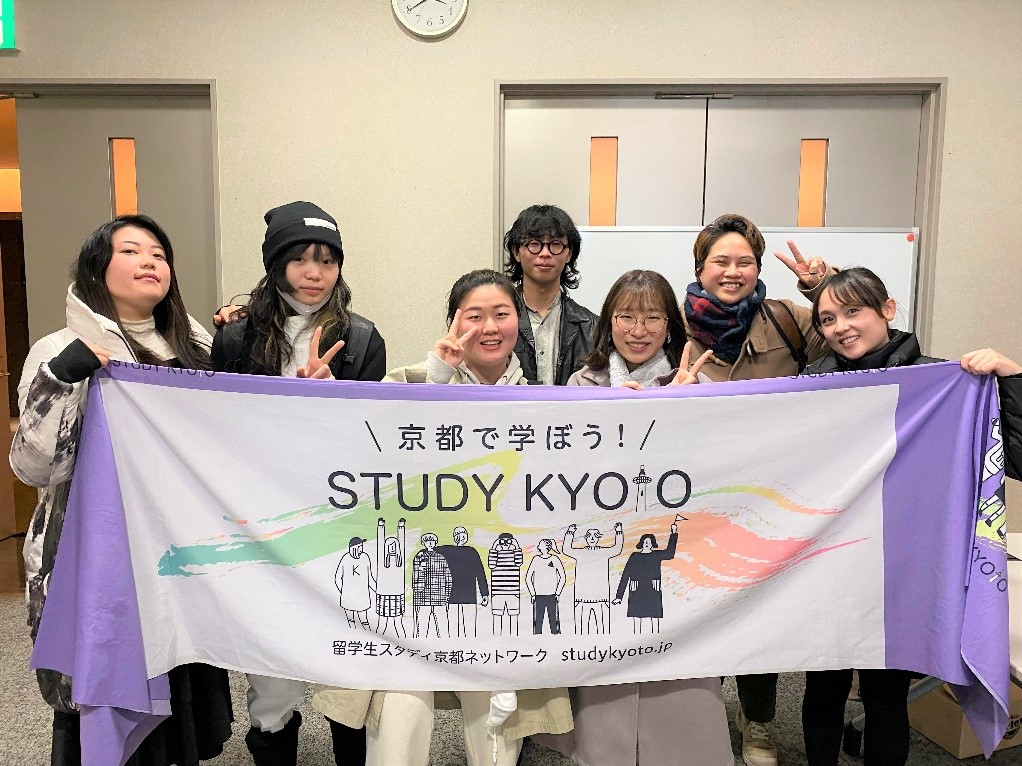
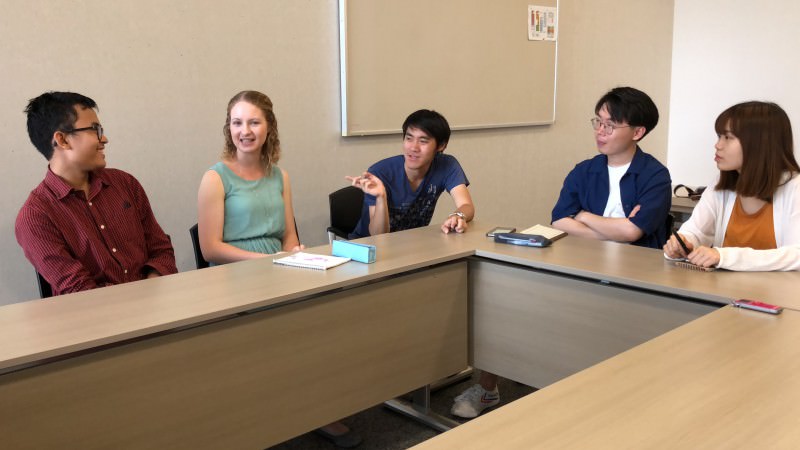
This time, we gathered three members of the Study Kyoto International Student PR team for an online roundtable discussion. They shared their real-life experiences, from what motivated them to start part-time jobs, to unique Japanese workplace culture, their failures and struggles, and what they gained from their work.
Roundtable participants

Originally from Taiwan.
Currently in her first year in Japan.
Part-time job: Research assistant at a research lab at Kyoto University.

Originally from the United States.
She has been living in Japan for four years.
Part-time job: Customer service at a tea ceremony experience shop.

Originally from China.
She has been living in Japan for four years.
Part-time job: Translation and summarization of international news (remotely).
Each part-time job found based on their interests and areas of expertise
Q) First, could you tell me what kind of part-time jobs you all have? What made you choose your current job?
- Haku:
-
I work as a research assistant (RA) in a laboratory at Kyoto University. It might be a somewhat unusual part-time job.
I’ve always been interested in regional studies using GIS and AI, and since it was similar in content to my doctoral research, my advisor asked me to participate in the research project. Rather than a part-time job, I feel like it’s a job where I can “contribute to real-world social issues while conducting research.” - Saki:
-
I’m somewhat similar. I work remotely translating overseas news articles about sustainability, and the content is related to my research topics of “green finance” and “sustainability.”
When I was looking for work, I used Indeed and other sites to search using keywords that interested me. Besides translation, I also have experience interning at international organizations, but I always keep in mind whether the work will contribute to my personal growth. - Maya:
-
Both of you have connections to your research, right? Mine is a little different; I’m interested in Japanese culture, and I worked at a tea ceremony experience shop for about a year.
Before that, I was a tour guide, but my job was becoming a bit unstable. My boyfriend looked for jobs where I could use English on job sites like “Engage.” Among them was an advertisement for “an attendant job where you wear a kimono,” and I thought, “This is a great opportunity to experience Japanese culture,” so I applied.
Q) When you applied for the part-time job, were you worried about your Japanese language skills?
- Maya:
-
Yes, I did. When I applied through the job site, an AI generated the text for me, and it was in perfect Japanese, so I was worried that there might be too much of a gap between it and my actual Japanese level.
Moreover, about 30 minutes before the interview, I looked at the job description again and realized that it was a job for a Japanese person who could speak English (laughs). - Saki:
- That would make me anxious (laughs).
- Maya:
- I was pretty flustered. But I thought, “I can speak Japanese, so I’ll probably be able to manage if I try hard,” and went ahead with the interview. I did a simple role-play in English, and the next day I received a call offering me the job.
- Saki:
- My interview was remote, and I was worried that I would get nervous and lose my ability to speak Japanese. So I thought about potential questions beforehand, wrote down my answers, and practiced until I memorized them.
- Haku:
- It’s important to be prepared, isn’t it? In Japanese, even things you normally know can suddenly become difficult to say when you’re nervous.
- Saki:
- That’s right. Thanks to the practice, I was able to speak calmly during the actual presentation.

"Japanese workplace culture" that surprised me after I started working there
Q) Have you ever been surprised by anything since you started working, thinking, “This might be unique to Japan”?
- Haku:
-
For me, it’s “Otsukaresama desu” (Thank you for your hard work). I was surprised at how many times a day it was said.
In the morning, when I entered the lab, it was “Otsukaresama desu.” When I passed the professor in the hallway, it was “Otsukaresama desu.” And when I left, it was “Otsukaresama desu.” At first, I thought, “I haven’t even done anything yet, and they’re already saying they’re tired” (laughs). - Maya:
- It’s true, it’s used a lot in Japan.
- Haku:
- In Taiwan, it’s not very common to say the same greeting multiple times a day. But now I understand that it doesn’t simply mean “You look tired,” but also includes meanings like “Thank you for your continued support today” or “Thank you.” I now use it naturally myself.
- Maya:
-
I was impressed by their attitude of prioritizing academics. My work schedule was also flexible; I would submit my availability each month.
In America, you often have to ask for days off yourself. At my workplace, there was an atmosphere of “You’re a student, so academics are important. Part-time work doesn’t have to be your top priority,” which surprised me.
Also, they often expressed gratitude verbally. Even for things that were expected as part of the job, they would thank me, which made me want to express my gratitude as much as possible. - Saki:
- When I interned at a Japanese company, I felt that they placed a great deal of importance on teamwork. Instead of each person only doing their own work, there was a strong sense of “let’s do this together” and “let’s not cause trouble for others,” and there was a natural atmosphere of mutual support.
- Haku:
- I feel the same way. Once, I was asked to carry two boxes of copy paper for the lab. I thought, “I can carry two boxes by myself,” but the professor had sent an email to everyone in the lab saying, “Please support Haku.”
- Maya:
- That’s kind of you.
- Haku:
- In the end, I was able to carry it by myself (laughs). But I realized that it’s not about “can I do it or not,” but rather about “not putting the burden on just one person.” In Taiwan, there’s a lot of thinking that “if you can do it yourself, do it yourself,” so that really stuck with me.

Q) Conversely, were there any things you had trouble getting used to?
- Saki:
- It’s definitely polite language. I studied it in school, but when I try to use it in actual work, it doesn’t come to me right away.
- Maya:
- I understand. I also use polite language. I can use polite forms like “desu” and “masu,” but it was difficult for me to use proper honorific language.
- Saki:
- But I gradually got used to it by actually using it at work. Studying in school and actually using it are definitely different things.
- Haku:
-
I noticed differences not only in language but also in how people respond to work-related requests.
At first, whenever I was asked to do something, I would immediately say “Yes, I can.” In Taiwan, responding quickly with “Yes, I can” can give the impression of being proactive.
But in Japan, it’s common to first check your schedule or consult with relevant parties before responding. I once said “Yes, I can,” only to realize it conflicted with another appointment, which made me very anxious. - Maya:
- Ah, yes, that’s true. Sometimes it’s better not to answer immediately.
- Haku:
- That’s right. And then I learned to say, “I’ll check and get back to you.” Since I started using that phrase, I’ve felt more at ease.

Q) What do you do when you don’t understand the instructions in Japanese, or when you’re not confident in your own understanding?
- Saki:
-
I sometimes misunderstand things when I only hear them verbally, so I make sure to confirm things via chat or email as well.
By writing down what I understand and asking, “Is this understanding correct?”, I can prevent misunderstandings with the other person. - Maya:
-
That’s true. At my part-time job, important announcements, such as rule changes, were always communicated in writing.
In my case, there were many people who could speak English at work, so I didn’t have too much trouble. The fact that I could confirm important things in writing might have been one of the reasons why I felt secure working there. - Haku:
- I also believe it’s important not to say “yes” when you don’t understand something. Just like the “I’ll check and get back to you” example I mentioned earlier, I’ve come to realize since working in Japan that properly checking things is part of the job.