International Student Roundtable: Graduate Studies in Kyoto—Students Share Their Experiences of Blending Academics with Daily Life

2026.10.19

Studying at a graduate school in Japan offers an experience quite distinct from undergraduate or language-study programs. It involves engaging deeply with your chosen field of research, interacting with professors and peers, and living in the city of Kyoto. What kind of learning and discoveries await in such an environment? We brought together three members of the "Study Kyoto" International Student PR Team for an online roundtable discussion. They shared candid insights on everything from how to choose a graduate school and the realities of daily life as a graduate student, to the unique appeal of living in Kyoto.
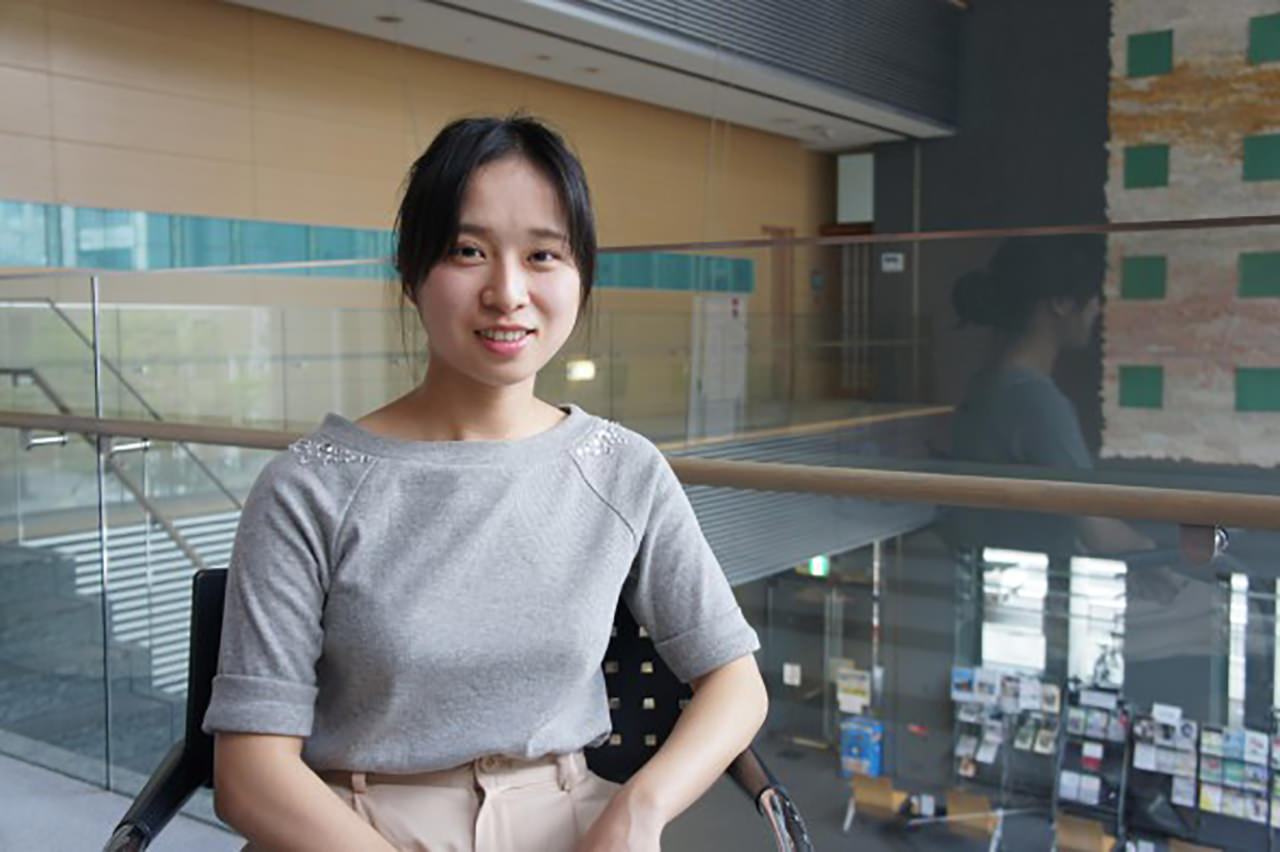
Roundtable Participants

From Taiwan. Enrolled in a graduate program at Kyoto University.

From the United States. Enrolled in a graduate program at Doshisha University.

From China. Enrolled in a graduate program at Kyoto University.
A research theme chosen precisely because it is Kyoto
Q) Could you start by telling us about your research?
- Maya:
-
My research focuses on business.
For my master’s thesis, I examined the burdens experienced by service staff in Kyoto’s restaurants and cafes when interacting with international tourists.
I arrived at this topic after observing staff struggling to assist foreign visitors during my own part-time work as a tour guide and at a facility offering tea ceremony experiences in Kyoto. - Saki:
-
My research explores how initiatives related to green finance and sustainability impact a company’s profits and economic performance. Specifically, I am interested in how a company’s engagement with environmental and social issues translates into corporate value and operational performance.
In recent years, global interest in climate change and environmental issues has grown, and companies are now expected to pursue sustainable management—considering the environment and society—rather than focusing solely on profit. I believe that uncovering the relationship between sustainability initiatives and economic outcomes is a vital topic for both the business world and society at large. - Haku:
-
My research focuses on land and urban spaces in East Asia.
While living in Kyoto, I noticed differences in transport infrastructure compared to what I was familiar with in Taiwan; this prompted me to conduct a comparative study of the subway networks in Kyoto and Taipei, which I then compiled into a thesis.
One of the most interesting aspects of my graduate studies in Kyoto is how the small differences or questions I encounter in my daily life can evolve into actual research topics and academic papers.

Q) To begin with, why did you decide to pursue graduate studies in Kyoto?
- Maya:
-
I had been living in Kyoto since I attended a Japanese language school, and I just fell in love with the city.
Honestly, I didn’t want to move away! (laughs)
In fact, I had decided that if I didn’t get into a graduate program in Kyoto, I would just start working instead. - Saki:
-
For me, the biggest reason was the research environment at Kyoto University. Also, because Kyoto is a city rich in history and culture, I knew I would find plenty of inspiration outside of my academic studies.
Furthermore, the cost of living is relatively low, and there are tuition exemption programs available—this made it much easier to focus on my research without a heavy financial burden. - Haku:
-
I feel the same way.
Compared to Tokyo, the cost of living in Kyoto is lower, which makes it a very manageable place for graduate life.
Besides that, my research focuses on land and urban spaces in East Asia, so the opportunity to conduct my research while actually living in an East Asian city was a major draw for me.

Thinking for yourself precisely because you have the freedom to do so: Life as a graduate student researcher
Q) What are the unique challenges and rewarding aspects of pursuing graduate studies abroad?
- Haku:
-
When you pursue graduate studies abroad, you aren’t just studying the Japanese language—you have to use Japanese to conduct actual research, which I find quite challenging.
On the other hand, the high level of freedom in research is really interesting.
You get to come up with your own research topic, gather materials, consult with your professor and lab members, and move forward with your work at your own pace. - Maya:
-
I totally agree. In graduate school, there are fewer classes, and from the second year onward, the focus shifts almost entirely to research—so you end up with a fair amount of free time.
It’s great to be able to travel or spend time on things you personally enjoy, but that also means you have to be disciplined about managing your own schedule. - Saki:
- That’s true. Graduate school is centered on research rather than coursework. You’re expected to think for yourself and drive your own research forward. At the same time, the ability to delve deeply into a topic that genuinely interests you is a major draw.
- Haku:
- Exactly. While there are certainly challenges, the fact that you can think for yourself and steer your own research is truly rewarding.
Q) What is your relationship like with your professor and lab members?
Do you ever notice cultural differences while working together on research?
- Haku:
-
I’ve noticed differences in how people approach collaborative research.
In my lab, multiple researchers or students sometimes form a team to co-author a single paper. In Taiwan—especially within the humanities and social sciences—there’s often a perspective that writing a paper on your own is a sign of a researcher’s independence, so I felt that was a bit of a difference. - Maya:
-
In my major, there are many international students, and the classes are taught in English, so I haven’t really felt much of a cultural gap. However, the nature of my relationship with my professor might be a bit different. There aren’t many opportunities for one-on-one consultations; essentially, I conduct my research independently and seek advice from my professor only when necessary.
Because of this, when I run into trouble with my research, I often turn to my classmates for help.
We frequently exchange information and support one another. - Saki:
-
In my lab, we have a session about once a week where the whole group shares progress updates and holds discussions—that’s when I get advice from my professor.
I’m able to conduct my research freely at my own pace, yet I can still get expert input from my professor whenever I hit a snag; I feel like the balance is just right.

Q) Were there any aspects of the application process for graduate school or studying abroad that you found particularly difficult?
- Maya:
-
For me, the enrollment process—especially the paperwork—was extremely challenging.
In the U.S., most things can be handled online, but in Japan, there are many documents that need to be printed out and sent by mail.
There’s also a wide variety of paperwork involved—getting transcripts sent from the U.S., verifying past travel history to and from Japan—it’s all very detailed. At one point, I even needed a record of a stay in Japan from when I was five years old, so I had to check with my parents! (laughs) - Haku:
-
The path to enrollment was quite challenging for me.
For universities in Western countries, you generally submit the required documents and complete an interview online; once you’re accepted, you then travel to the destination.
In Japan, however, you might sometimes need to arrive in the country before you even know if you’ve been accepted—living there as a “research student” while preparing for the entrance exam.
On top of that, I had to tailor my research proposal to each specific laboratory, which meant the preparation alone took over a month. - Saki:
-
Applying for scholarships and handling the procedures for studying in Japan were particularly difficult.
As for scholarships, each foundation has different requirements regarding documentation and application methods—some even required documents to be filled out by hand. I also had to prepare research proposals and statements of purpose, which was quite a struggle to manage alongside my regular studies and research.
Regarding the study-abroad process, there were so many documents to prepare—such as the application for a Certificate of Eligibility (COE) and the visa itself—that it felt quite complicated at first. I had to carefully follow the guidance provided by the university and complete each step one by one.
Both processes are time-consuming, so I’ve learned that it’s crucial to check the necessary information early and give yourself plenty of time to prepare. - Maya:
- That’s so true—there are so many procedures to complete before enrollment, so I would advise anyone planning to study abroad to start their preparations as early as possible.